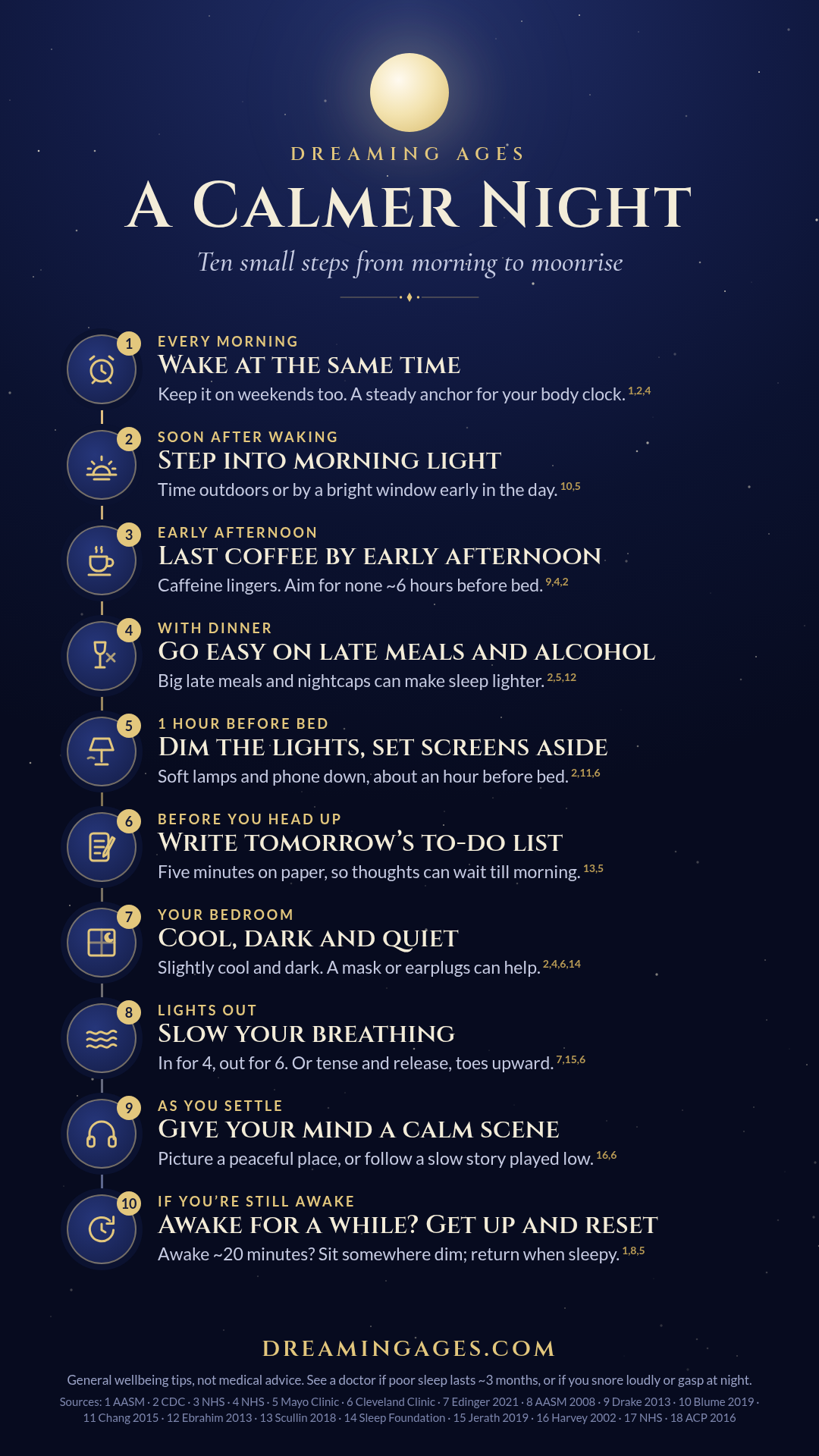
Small habits that may help, drawn from sleep-medicine guidance. Small numbers link to the sources.
Morning
1
Every morning
Wake at the same time
Pick one wake-up time and keep it, weekends included, even after a poor night. A steady anchor may help your body know when night is coming.124
2
Soon after waking
Step into morning light
Time outdoors in the morning, or by a bright window, may help set your inner clock for an easier evening.105
Afternoon
3
Early afternoon
Last coffee by early afternoon
Caffeine can linger for hours. Many people sleep better with no tea, coffee or cola in the six or so hours before bed.942
Evening
4
With dinner
Go easy on late meals and alcohol
A big late meal can keep you uncomfortable, and a nightcap can make sleep lighter and more broken later in the night.2512
5
1 hour before bed
Dim the lights, set screens aside
Soft lamps instead of bright overheads, and phones put down, can help your mind shift into night mode.2116
6
Before you head up
Write tomorrow’s to-do list
Five minutes jotting down what’s on your mind, and what you’ll do about it tomorrow, may leave fewer thoughts to chase in bed.135
Bedtime
7
Your bedroom
Cool, dark and quiet
A slightly cool room (about 15–19°C or 60–67°F suits many people), blackout curtains or a mask, and earplugs or a steady soft sound may help you stay asleep.24614
8
Lights out
Slow your breathing
Breathe in for 4, out for 6, for a few minutes. Or tense and release each muscle group in turn, from your toes upward.7156
9
As you settle
Give your mind a calm scene
Picturing a peaceful place, or following a slow story at low volume, may crowd out the worries that keep you awake.166
Night
10
If you’re still awake
Awake for a while? Get up and reset
If you’ve been lying awake for what feels like 20 minutes, get up, sit somewhere dim and do something quiet, then return when sleepy. Skip the clock-watching.185
Try one change for a week or two before adding the next. Sleep tends to settle gradually, not overnight.
Most sleep troubles ease with time and small changes. If yours don’t, help is available.
When to talk to someone
Poor sleep has gone on for a few months, or is making your days hard to cope with.4
Someone notices loud snoring, gasping, choking, or pauses in your breathing, or you feel very tired most days.17
You’ve tried changing your habits and nothing has shifted.4
There’s no need to wait until it’s “bad enough”. Asking early is sensible.
Start with your family doctor
A family doctor or GP can look for causes, such as medicines, pain or a sleep disorder, and refer you to a sleep clinic or a talking therapy if needed.4